
Home improvement
Deck Building & Restoration in Maynard, MA
New decks and full restorations: repairs, sanding, staining and sealing.

Deck Building & Restoration
Decks built and restored to last
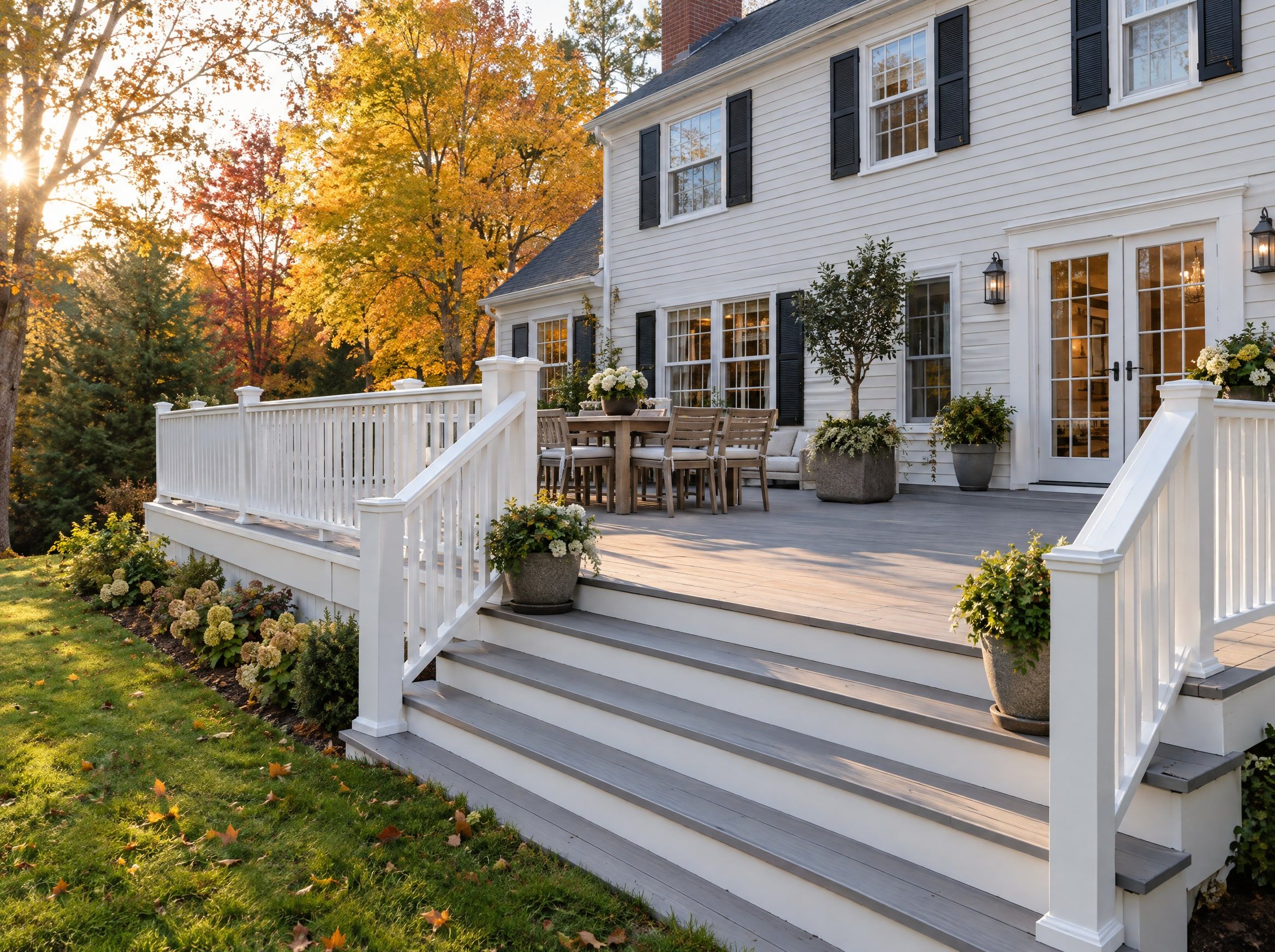
Whether you want a brand-new deck or need to bring an old one back to life, we handle the whole project. New builds can be pressure-treated wood or low-maintenance composite.
Restorations start with an inspection of boards, railings and framing. We replace damaged pieces, wash and sand the surface, then stain and seal it so it holds up to snow and sun.
A worn deck can have two very different problems: an aging walking surface or a structure that needs rebuilding. Gray boards alone do not establish which one you have. Before choosing stain, replacement decking or a new layout, look at the supports, connections, stairs and railings that make the space usable and safe.
Restoration preserves serviceable parts while addressing specific defects, cleaning weathered wood and renewing its protective finish. A new build starts with different decisions, including size, attachment, foundations, material selection and permit review. Keeping those paths distinct helps prevent a cosmetic budget from turning into an unfinished structural project.
From its Maynard base, Pro House Painters & Home Improvement works with homeowners in surrounding Massachusetts towns within roughly 15 miles. The business began in 2016, and deck proposals are available as free written estimates. The walkthrough is an opportunity to compare repair priorities with longer-term goals, such as changing the stairs or switching from wood to composite.
The following guide explains how to judge restoration options, what a responsible preparation sequence involves and what new construction requires. It also covers maintenance after the work is complete. Whether the goal is a cleaner place for outdoor meals or an entirely new deck, the useful starting point is an agreed scope based on the existing conditions.
What’s included
- New wood and composite decks
- Board, railing and stair replacement
- Power washing and sanding
- Staining and sealing
- Railing and trim painting
- Inspection of framing and fasteners
One crew, start to finish
From layout and framing to the final coat of stain.
Low-maintenance options
Composite decking that does not need yearly staining.
Safer structure
Loose boards, railings and fasteners fixed properly.
Pricing
How much does deck building & restoration cost?
The price table below lists restoration at $1,500–$5,000, new decks at $30–$60 per sq ft and a new pressure-treated deck at $6,000–$14,000. Your proposal identifies the work and materials behind the total rather than assuming every deck of the same size costs the same.
| Service | Price | Typical projects |
|---|---|---|
| Deck Building & Restoration | New decks $30–$60 per sq ft |
|
Typical ranges, not quotes. Every home is different, so your free written estimate gives the exact price.
Condition below the decking
A usable frame with worn boards presents a different project from decay at posts, joists or the house connection. If inspection reveals structural deterioration, the scope needs to address that before spending money on stain or replacement surface boards.
Old finish and cleaning needs
Weathered bare wood may respond to a different preparation system than a deck with layers of peeling solid stain. Removing incompatible coatings can add substantial labor, particularly around balusters, board edges and stair treads.
Extent of board replacement
A few localized replacements can be included in a restoration allowance, while widespread splitting or decay changes the economics. New boards may also absorb stain differently from older wood, so the appearance and finishing plan deserve discussion before installation.
Wood or composite selection
Pressure-treated lumber and composite decking such as Trex have different purchase costs, installation details and care needs. Compare the selected product and complete assembly, including fasteners and trim, rather than treating all composite boards as interchangeable.
Layout, stairs and railings
A simple platform involves fewer details than a deck with multiple stair runs, corners or changes in elevation. Guard and handrail work, demolition and difficult access can affect the price even when the walking area is modest.
Approvals and concealed work
New construction and structural alterations may require drawings, permits and inspections through the local building department. Ask what the estimate includes and how unexpected footing or framing conditions will be documented before additional work is authorized.
Repair Decisions
Choose restoration only after checking the structure
Start by separating finish wear from material failure. Fading, dirt and a tired stain coat can often be addressed through preparation and refinishing. Soft wood, movement at the house, unstable stairs or a loose guard call for further evaluation. A fresh coating should never be used to disguise a defect that still needs repair.
The underside matters because a deck is a connected assembly. Surface boards can look acceptable while fasteners, flashing or supporting members have deteriorated. Access may limit what can be seen during the first visit, so a proposal should explain any inspection limits and the process for handling conditions exposed after boards are removed.
DIY work becomes especially risky when homeowners replace components by appearance alone. A new rail fastened into deteriorated framing does not solve the underlying problem, and a few screws added to a moving stair are not a structural assessment. For suspected instability, stop using the affected area until the cause has been evaluated and corrected.
Restoration makes the most sense when the remaining assembly can support the intended use and the repair scope is clear. Rebuilding may be the better route when deterioration is extensive or the desired layout changes substantially. Ask for a comparison that explains what remains, what is replaced and which future maintenance obligations follow each option.
Conditions to point out during a deck walkthrough
- Boards that feel soft, flex unusually or have fasteners pulling through them
- Movement in guards, stair handrails or the connection near the house
- Water collecting beside posts, board ends or the exterior wall
- Peeling finish, splinters and slippery areas that return after cleaning
- Earlier repairs or hidden sections that need closer examination

Restoration Sequence
Wash, repair and prepare wood before staining
A restoration plan should name the existing finish and the intended replacement system. Transparent stain will not reveal natural grain through an old opaque coating that remains on the boards. Where removal is necessary, choose a method appropriate to the wood and coating, with protection for nearby plants, siding and the ground below.
Cleaning removes dirt and surface contamination; it does not automatically make the wood ready to coat. Excessive pressure can tear soft fibers and leave an uneven surface that becomes obvious under stain. Follow cleaning-product instructions for dilution, dwell time and rinsing, then allow the deck to dry adequately before judging whether additional preparation is needed.
Damaged boards and fasteners should be addressed before finishing. Sanding can reduce raised grain and splinters on sound material, but cannot restore strength to decayed wood. Dust needs removal, and sanding should follow the stain manufacturer’s guidance because an overly polished surface may interfere with absorption. Replacement boards also need evaluation for moisture before coating.
Stain application is controlled rather than generous by default. Too much product can leave tacky areas, uneven sheen or a film that wears poorly. Work with the selected product’s coverage and coat instructions, maintaining a workable edge across boards. A separate clear sealer should not be added over stain unless the manufacturer specifically approves that combination.
What a restoration scope should make clear
- Whether old stain will be retained, stripped or tested for compatibility
- Which boards, stair parts and fasteners are included for replacement
- How wood will be cleaned without unnecessary fiber damage
- The sanding approach and required drying conditions before staining
- The named stain system and instructions for returning furniture
Decking Options
Compare pressure-treated lumber with composite decking
Pressure-treated wood offers a familiar appearance and can be refinished as it weathers. Treatment helps resist biological deterioration, but it does not eliminate checking, moisture movement or the need for care. New lumber may arrive too wet for stain, and a calendar-based waiting period is less useful than checking readiness against the selected coating instructions.
Stain opacity changes the look and the next maintenance job. More transparent finishes display grain and differences between old and new boards; solid stains offer more uniform color but conceal much of that variation. Benjamin Moore Woodluxe solid deck and siding stain is one example of a product with specific substrate, preparation and application requirements.
Composite decking such as Trex reduces routine refinishing because the boards are not maintained like a conventional stained wood surface. It still needs cleaning, and the supporting structure remains important. A conversion should verify joist condition, spacing, fastening and stair details against the exact decking installation instructions before replacement boards are ordered.
Review samples outdoors and consider the whole assembly: fascia, fastener visibility, stair edges and rail appearance. Surface temperature and feel vary with color, weather and exposure, so avoid assuming any material will remain cool in full sun. Product-specific installation and care documents should accompany the decision, especially when existing framing is proposed for reuse.
Compare complete systems rather than board prices
- Initial material selection alongside cleaning and refinishing expectations
- Framing suitability for the selected decking and stair configuration
- Color variation between replacement wood and retained boards
- Fasteners and connectors compatible with the materials being installed
- Manufacturer care requirements and separate product warranty terms

Seasonal Care
Allow drying time and plan for regular maintenance
Deck restoration depends on more than a rain-free workday. Washing leaves moisture in boards, shaded areas may dry slowly and overnight dew can shorten the application window. Stain needs air and surface conditions within its labeled limits, with enough time before rain or foot traffic. A fixed promise based only on the forecast high temperature misses those variables.
New construction has its own timing pressures: approvals, material availability and inspection scheduling can affect the sequence before finishing is considered. Wet pressure-treated boards may need additional drying before stain is appropriate, even after construction is otherwise complete. Ask whether the project includes a later coating visit or whether finishing will be a separate scope.
For a wood deck in Massachusetts, a two-to-three-year staining cycle is a useful starting point for planning, not a guaranteed interval. A heavily used sunny section may need attention sooner than a sheltered area, while persistent dampness creates different problems. Inspect annually and use the coating’s condition and manufacturer guidance to decide when cleaning, localized work or recoating is needed.
Composite care differs by product generation. The Trex care and cleaning instructions distinguish cleaning methods for different lines, so do not assume a pressure washer is suitable for every board. Keep drainage gaps clear, remove trapped leaves and use snow-removal tools approved for the surface. Furniture feet and dragged planters deserve attention too, because abrasion can damage either wood finishes or composite surfaces.
An annual deck care routine
- Clear leaves and debris where boards meet the house and around stairs
- Check for changing movement, loose fasteners and damaged rail components
- Clean spills with methods allowed by the decking or stain manufacturer
- Inspect exposed wood for worn protection before widespread deterioration develops
- Keep maintenance records and identify the exact stain or composite product used

Project Agreements
Set permit responsibilities and contract terms before building
A new deck in Massachusetts generally requires a building permit, although limited exemptions may apply to particular designs. State building code requirements and local zoning both need consideration. The local building department determines what your project needs, including application documents and inspection stages; do not assume that a previous deck makes replacement construction automatically exempt.
Massachusetts provides building-permit application forms for non-state-owned buildings, while municipalities manage local submissions. Discuss the proposed footprint, setbacks, attachment and stairs before purchasing materials. Ask who obtains the permit and coordinates inspections, and have the written agreement reflect that responsibility. Structural alterations can need review even if the deck size stays unchanged.
Compare proposals by demolition, disposal, retained framing, new materials and finishing work. Confirm how concealed damage will be handled and whether railings, stairs and fascia are included. For a restoration, identify the preparation standard and expected color variation. For a new build, ask for the product names and the drawings or specifications that define the result.
Insurance documentation is available with a Pro House Painters estimate for both liability and workers’ compensation coverage. Deck-building warranty terms belong in the individual project contract. The company’s two-year painting workmanship warranty excludes horizontal surfaces, including decks, railings, stairs and porch floors, so deck staining does not receive that coverage. To discuss a proposal, call (978) 440-2251 or request a deck estimate.
Questions to resolve before accepting a deck proposal
- What findings support restoration instead of rebuilding this deck?
- Which existing structural components will remain in use?
- Who confirms permit requirements and arranges required inspections?
- How are additional repairs approved after concealed areas are opened?
- What warranty terms apply to construction, finishes and manufacturer products?
Google reviews
What our customers say
“I hired Pro House Painters to paint our aluminum siding colonial home. They worked very hard to prep the house (power wash) and then paint the house, trim and shutters. They did a truly wonderful job. They were neat, were super careful with all of my plants and flowers (I have a lot) and the crew was super nice! The house looks tremendous! …”
“Rodrigo and his crew were a pleasure to deal with - very courteous, neat, friendly, and professional. They painted six rooms, two of which needed skim coating, a stairwell, and three ceilings, two of which needed repair, all for the price of $7429. Very highly recommended.”
“I am 83 years old and have hired many painters through the years. Pro House Painters rank Number 1 in my book! They recently painted my large deck and bannisters, my shed, and all the trim on my house. … Rodrigo responds immediately to texts and the crew shows up on time, as promised, and works diligently all day.”
How it works
Four steps, no surprises
The same careful process on every job, from a single room to a full exterior.
- 1
Free estimate
We walk the project with you, talk colors and send a clear written quote.
- 2
Prep & protect
Furniture, floors and landscaping covered. Surfaces cleaned, patched and sanded.
- 3
Expert application
Premium materials applied by an experienced crew, on schedule.
- 4
Final walkthrough
We inspect every room with you and touch up anything before we call it done.

Good to know
Peace of mind, savings and small jobs
FAQ
Deck Building & Restoration questions
Still have a question? Call or text us anytime.
Should I restore my deck or replace it?
Choose after assessing the framing, supports, connections and walking surface together. A serviceable structure with limited board damage may suit restoration, while extensive deterioration or a major layout change can favor rebuilding. Ask the estimator to explain the limits of the inspection and which findings could change that recommendation.
How much does deck restoration cost in Massachusetts?
The site’s restoration range is $1,500–$5,000 for repairs, washing, sanding and staining. Coating removal, the amount of board replacement and difficult details can change the work required. A written scope shows whether your project fits that range or needs a broader repair plan.
How much does a new pressure-treated deck cost?
The published planning range for a new pressure-treated deck is $6,000–$14,000, and the new-deck rate is $30–$60 per sq ft. Those figures do not establish a separate composite price. Layout, stairs, site access and the selected assembly need review before a project total can be quoted.
Do I need a permit to build a deck in Massachusetts?
Plan on speaking with your local building department before construction. New decks generally need permits under the state building code, subject to applicable exemptions, and zoning can affect placement independently. Confirm requirements for your exact design and record permit and inspection responsibilities in the contract.
How often should a wood deck be stained in Massachusetts?
Budgeting around two to three years is reasonable, then adjust after checking wear and the selected product’s care instructions. Sun, foot traffic and water exposure vary across a single deck. Inspect each year so that worn sections receive attention before the entire finish deteriorates.
Do you install Trex or other composite decking?
Composite decking, including Trex, is an available option to discuss during the estimate. Selection should include the exact board line, compatible fasteners and framing requirements. Reusing an older frame is a condition-dependent decision, so changing only the visible boards should not be assumed in advance.
Can you stain a deck right after pressure washing?
Only after the wood has dried to the coating manufacturer’s requirements and any remaining preparation is complete. Drying varies with weather, shade and the amount of water absorbed, so the next morning is not automatically suitable. Damp wood can compromise stain absorption and adhesion.
Is staining better than painting a wood deck?
Use a coating specifically approved for the walking surface and compatible with what is already there. Ordinary siding paint is not a substitute for a deck-rated system. The preferred finish depends on desired opacity, existing layers and willingness to handle future preparation; thick coverage alone does not guarantee longer service.
Can a few rotten deck boards be replaced without rebuilding?
Localized board replacement may be possible when the supporting structure is suitable and the source of damage is addressed. Removing those boards can reveal additional problems underneath. New wood may differ in color and absorption, so discuss both repair limits and the expected finished appearance.
Does deck work include insurance and a warranty?
An estimate can be accompanied by a certificate showing the company’s liability and workers’ compensation insurance. Construction warranty obligations are specified in the deck project agreement, with manufacturer coverage considered separately. The limited two-year painting warranty does not extend to deck staining, railings, stairs or porch floors.
Does composite decking need maintenance?
It needs routine cleaning and attention to drainage even though it avoids the normal wood-staining cycle. Use the instructions for your specific product and generation, particularly before pressure washing or removing ice. Dirt trapped under planters and leaves lodged between boards can create avoidable cleaning problems.
Service areas
Deck Building & Restoration near Maynard
We work in 43 towns within 15 miles. These are the closest.
Google reviews
More services
You might also need


Ready to start your deck building & restoration project?
Free written estimates for homeowners within 15 miles of Maynard.