
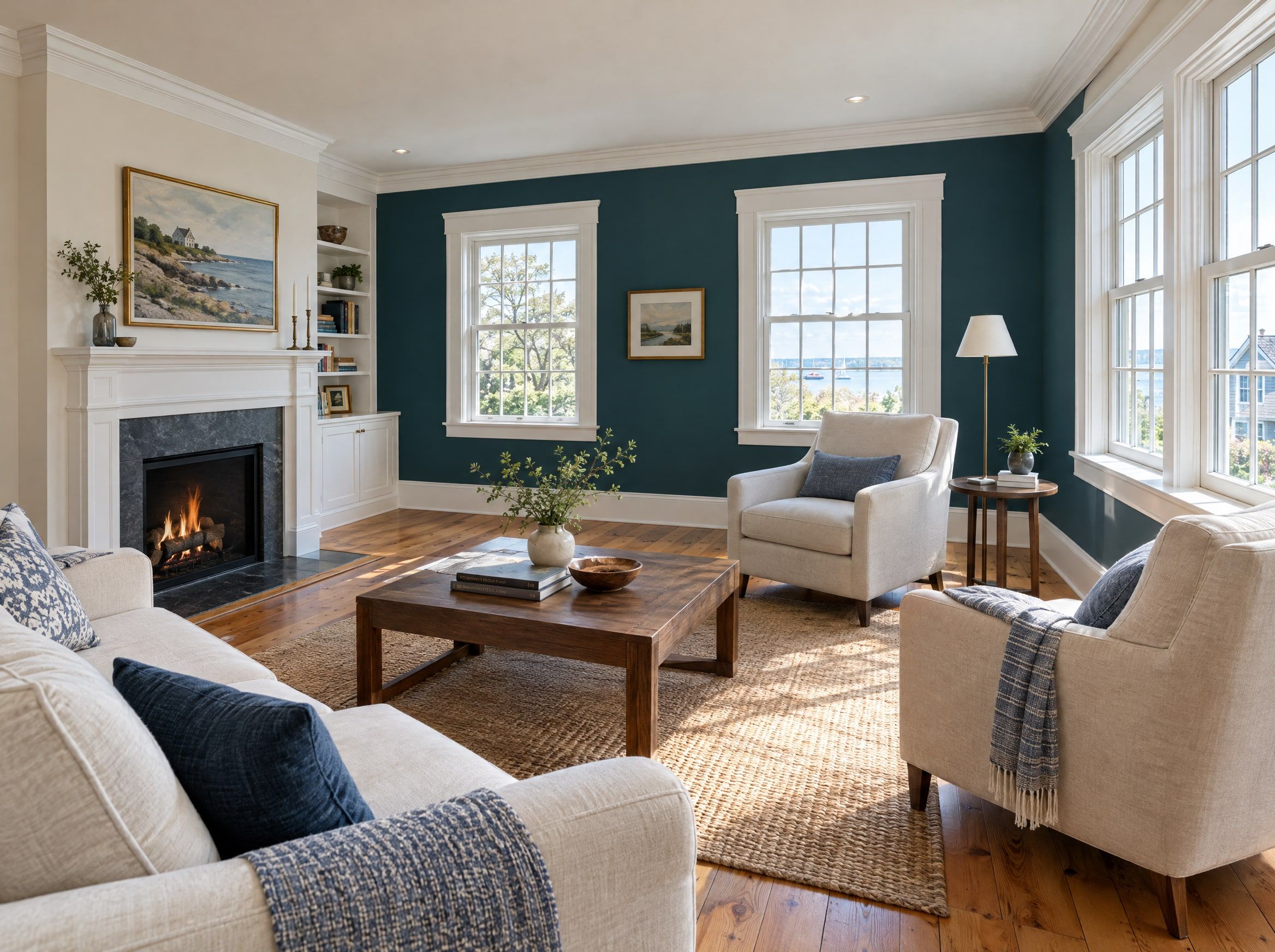
Painting service
Interior Painting in Maynard, MA
Walls, ceilings, trim and doors with clean lines and zero mess left behind.

Interior Painting
Interior painting that looks sharp up close
A fresh interior is the fastest way to make a house feel new again. We paint single rooms, open floor plans and whole homes, from ceilings and walls to the trim, doors and stair rails that take the most wear.
Every job starts with protection and prep: furniture covered, floors masked, nail holes and cracks filled and sanded. That prep is what makes the finish look crisp in daylight instead of just from across the room.
Interior painting starts with deciding what you want to change when you walk into a room. A darker ceiling, yellowed door casings, uneven patches, or a wall color that fights the flooring can each call for a different scope. Before choosing colors, list the surfaces that bother you and the ones you want to keep. That makes the estimate more useful than asking for a general price to freshen everything up.
In Maynard and nearby MetroWest towns, an interior can combine older plaster, newer drywall, stained wood, and previously painted trim in the same space. Each surface needs its own preparation and coating decisions. A wall that looks sound straight on may reveal repair edges when afternoon sunlight crosses it. Discuss the viewing conditions and the level of smoothness you expect before work begins, especially in rooms with large windows.
Established in 2016, Pro House Painters & Home Improvement works from Maynard, Massachusetts, serving communities within roughly 15 miles. The free written estimate should settle room boundaries, repairs, products, and scheduling. Understanding those details helps explain why two proposals for the same room can cover very different amounts of work.
Include household routines in the plan: an office may need to reopen each evening, while an empty bedroom can remain undisturbed. Discuss pets, sleeping arrangements, heavy furniture, and odor sensitivities so access and drying time fit the schedule.
What’s included
- Walls and ceilings in any sheen
- Trim, baseboards, crown molding and doors
- Patching, caulking and drywall touch-ups
- Accent walls and color consultation
- Low-odor and zero-VOC paint options
- Daily cleanup so you can live in the house
Crisp cut lines
Hand-cut edges at ceilings and trim, no tape bleed.
Respect for your home
Floors, furniture and fixtures protected from day one.
Durable finishes
Scrubbable paints in kitchens, baths and hallways.
Pricing
How much does interior painting cost?
The price table below provides the starting ranges for interior work. Your written quote should explain which surfaces and preparation tasks account for the total.
| Service | Price | Typical projects |
|---|---|---|
| Interior Painting | $2–$6 per sq ft |
|
Typical ranges, not quotes. Every home is different, so your free written estimate gives the exact price.
Surfaces included in the room
Painting four walls differs from coating the ceiling, baseboards, window casings, and doors too. Ask for those boundaries to be explicit, including closets and the inside faces of doors that open into adjoining rooms.
Condition beneath the color
Small nail holes require less work than broad areas of damaged drywall paper, recurring cracks, or uneven earlier repairs. The estimate should distinguish routine patching from extensive smoothing so the expected appearance is clear.
Ceiling height and access
Stairwells, tall foyers, and walls above built-ins can require additional access equipment and setup. Tight furniture arrangements also slow the work when painters must protect and reopen the same area in stages.
Existing finish and color change
A glossy coating may need cleaning and surface preparation before another paint will adhere. Deep colors, staining, and major shifts between light and dark can change the primer requirements and the work needed for uniform coverage.
Paint choice and room use
A washable wall coating and a trim enamel serve different purposes and may have different application requirements. Compare the named product lines and sheens rather than treating every gallon from one brand as interchangeable.
Occupied rooms and older coatings
Phased work around a household can add protection and handling time compared with an empty room. Where work disturbs paint in a pre-1978 home, applicable lead-safe requirements must be evaluated before preparation begins and reflected in the scope.
Professional Judgment
When an interior painter earns the difference
Rolling an open wall is often the easiest part of painting a room. The difficult decisions come earlier: whether a stain needs blocking, why a crack has returned, whether an old coating is sound, and how much repair will remain visible after painting. Hiring a professional is particularly useful when several of those conditions appear together or when the room has complicated edges and woodwork.
A common DIY mistake is putting fresh paint over a dirty or unstable surface because the new coating appears to cover it immediately. Grease can interfere with adhesion, loose layers can release later, and water stains can migrate through ordinary wall paint. A painter should identify those problems before discussing the final color. Active leaks and dampness need correction before the decorative work can succeed.
Another frequent problem is chasing partially dried paint with a roller or brush. Reworking an area after it begins setting can leave texture and lap marks that show under side lighting. Consistent application, sensible working sections, and respect for the product instructions matter more than trying to finish quickly. The same restraint applies when removing tape or closing freshly painted doors.
A small project may still fit a simpler service. If you have a few clearly defined tasks, review Painter for a Day and discuss what can reasonably fit into one painter’s 7.5-hour interior day at $530. Repairs, drying intervals, and the number of separate surfaces determine whether that format suits the job; a whole room is not automatically a one-day assignment.
Situations worth discussing at the walkthrough
- Cracks that reappear after earlier patching attempts
- Water marks whose original cause needs investigation
- Peeling layers or glossy surfaces with uncertain adhesion
- Tall walls or stair landings that complicate access
- Woodwork with ridges, drips, or sticky closing edges
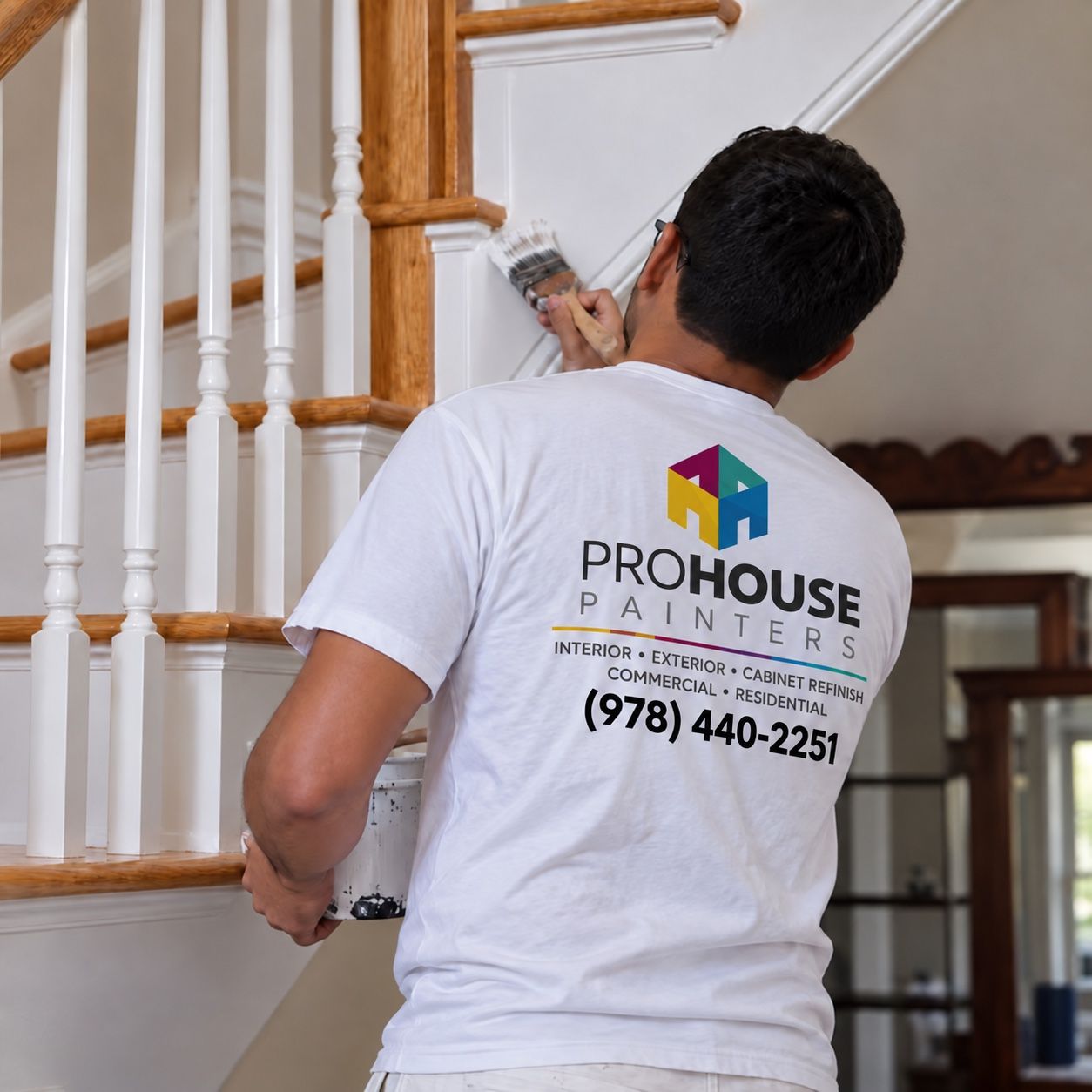
Surface Preparation
Make the preparation visible in the plan
A useful preparation plan starts with protection and inspection rather than a vague promise to prep as needed. Identify which furnishings move, what remains covered, and how floors and travel routes will be protected. Window treatments, picture hooks, switch plates, and shelving all affect access. Settle responsibility for removing and reinstalling these items before the room becomes a work area.
Wall preparation should match the actual defect. A shallow dent may need filler and smoothing, while torn drywall paper can require sealing before repair material is applied. Cracks at moving joints need a different assessment from isolated picture holes. Broadly uneven walls may need more extensive treatment than spot repairs; paint changes color and sheen but does not flatten a wavy substrate.
Cleaning, sanding where appropriate, dust removal, and primer selection work together. A repaired patch can absorb paint differently from the surrounding wall and leave a visible dull area unless it is sealed appropriately. Caulk is useful at suitable trim joints, but it should not be used to disguise every opening. Moving components and moisture paths require a more careful decision than simply filling the gap.
For homes built before 1978, do not assume ordinary sanding is an acceptable starting point. The EPA Renovation, Repair and Painting program governs covered work that disturbs lead-based paint, with specific exceptions and requirements. Massachusetts also has its own rules; the state homeowner guidance on lead-safe renovation helps frame the questions. Ask how applicability, containment, dust control, and cleanup will be addressed without assuming that repainting alone constitutes lead abatement.
Preparation details to put in writing
- Furniture handling and protection for each work zone
- Specific wall defects included in the repair allowance
- Areas requiring stain blocking or adhesion preparation
- Treatment of repaired spots before the finish coats
- Lead-safe planning where older painted surfaces are disturbed

Color And Finish
Choose the coating for the surface and the light
A color name alone does not define a paint specification. Product line, sheen, substrate, and application instructions all affect the result. Sherwin-Williams and Benjamin Moore offer multiple interior options, so an estimate should identify what is intended for walls, ceilings, and woodwork separately. A paint suitable for a broad bedroom wall is not automatically the right material for a door that gets handled daily.
Lower sheens generally make surface irregularities less conspicuous, while more reflective finishes can emphasize patch edges and uneven trim. Washability also depends on the formulation, not just the sheen name. Compare the demands of a quiet bedroom with a hallway where bags rub against the wall. In a bathroom, coating selection belongs alongside ventilation and moisture control, since paint cannot correct persistent condensation.
For doors and trim, a dedicated enamel can provide a different handling and leveling profile from wall paint. The manufacturer describes Emerald Urethane Trim Enamel for applications including interior trim and doors. That makes it a useful product reference rather than a promise that every piece of woodwork will receive the same coating. Existing finish compatibility and the current product directions should guide the final specification.
Evaluate sample colors against fixed materials such as countertops, flooring, and tile. Look at the sample in morning light and under the lamps used at night, and include the proposed trim color nearby. A small card can hide how strongly a color reads across an entire wall. If an adjoining kitchen is part of the plan, coordinate with cabinet refinishing before selecting the final wall shade.
Decisions that prevent finish surprises
- Record the manufacturer, product line, color, and sheen
- Check samples beside permanent flooring and tile
- Judge repaired walls under the room’s normal lighting
- Choose woodwork coatings for repeated contact and cleaning
- Confirm primer compatibility with the existing surface

Everyday Care
Protect the finish while it hardens and afterward
A room can look complete before its paint has developed its final resistance to washing and contact. Drying, recoating, and curing describe different stages, and their timing depends on the product and conditions. Ask when furniture can return, when doors can close normally, and when cleaning can begin. Moderate indoor conditions and the specified ventilation help the coating develop as intended.
Avoid pressing furniture, storage bins, or picture frames against newly painted surfaces too soon. Do not test a fresh wall by scrubbing it simply because it feels dry. Once cleaning is appropriate, start with the mildest method the manufacturer allows and a soft cloth. Strong cleaners, abrasive pads, and repeated hard rubbing can alter sheen even where the paint remains attached.
There is no single repaint interval that fits every interior. A guest room may stay presentable much longer than a busy mudroom, and recurring moisture can shorten service life regardless of the paint price. Check frequently touched areas, plumbing-adjacent walls, and window trim periodically. Address leaks and worn caulk when they appear rather than waiting for staining or peeling to spread.
Keep a record of the finished specification and label any leftover paint by room and surface. Touch-ups can still show because the existing coating has aged or because application texture differs. Test a discreet spot before repairing a highly visible wall. When the difference remains obvious, repainting from corner to corner often produces a more consistent appearance than enlarging the patch repeatedly.
Simple habits for painted rooms
- Follow the selected coating’s waiting period before washing
- Use gentle cleaning tools and avoid abrasive rubbing
- Keep furniture from scraping against painted walls
- Investigate moisture marks before covering them again
- Save labeled product details for later maintenance

Hiring Questions
Compare the written work, room by room
Two proposals become easier to compare when each lists the same surfaces and repair expectations. Walk through the rooms with both estimates and check ceilings, closets, trim faces, doors, and transitions into neighboring spaces. Ask what happens if preparation exposes damage that was not visible initially. A clear method for approving additional work prevents an ordinary discovery from becoming a billing surprise.
Discuss the application plan and the standard for the finished appearance. How will coverage be achieved, when will repaired areas be inspected, and what lighting will be used at the final walkthrough? A fixed coat count does not explain how a difficult color change or uneven surface will be handled. The scope should connect the proposed materials and preparation to the result you expect.
Insurance and warranty documents belong in that comparison too. Pro House Painters has liability coverage and workers’ compensation for its jobs, and a certificate can accompany your estimate. Painting work also has a 2-year workmanship warranty, limited to peeling, blistering, or chipping caused by workmanship under the published terms. Review those terms rather than assuming every scuff, leak, or substrate problem is covered.
Close the planning conversation by agreeing on room access, progress updates, and how walkthrough concerns will be recorded. Request a free written estimate through the Maynard contact page or call (978) 440-2251; photos help introduce the scope before surface inspection.
Questions to bring to the estimate
- Which surfaces and repairs does this total include?
- What products and coverage plan are specified?
- How will changes to the agreed scope be approved?
- Can I review the insurance certificate and warranty terms?
- How are walkthrough corrections documented and resolved?
Google reviews
What our customers say
“I hired Pro House Painters to paint our aluminum siding colonial home. They worked very hard to prep the house (power wash) and then paint the house, trim and shutters. They did a truly wonderful job. They were neat, were super careful with all of my plants and flowers (I have a lot) and the crew was super nice! The house looks tremendous! …”
“Rodrigo and his crew were a pleasure to deal with - very courteous, neat, friendly, and professional. They painted six rooms, two of which needed skim coating, a stairwell, and three ceilings, two of which needed repair, all for the price of $7429. Very highly recommended.”
“I am 83 years old and have hired many painters through the years. Pro House Painters rank Number 1 in my book! They recently painted my large deck and bannisters, my shed, and all the trim on my house. … Rodrigo responds immediately to texts and the crew shows up on time, as promised, and works diligently all day.”
How it works
Four steps, no surprises
The same careful process on every job, from a single room to a full exterior.
- 1
Free estimate
We walk the project with you, talk colors and send a clear written quote.
- 2
Prep & protect
Furniture, floors and landscaping covered. Surfaces cleaned, patched and sanded.
- 3
Expert application
Premium materials applied by an experienced crew, on schedule.
- 4
Final walkthrough
We inspect every room with you and touch up anything before we call it done.

Good to know
Peace of mind, savings and small jobs
FAQ
Interior Painting questions
Still have a question? Call or text us anytime.
How much does it cost to paint a room in Massachusetts?
The published range is $300–$750 for a single room and $500–$1,200 for a larger room with trim. Repairs, access, and the exact surfaces included determine the written quote. Use those figures as planning ranges rather than assuming every bedroom has the same scope.
How long does it take to paint a bedroom or living room?
A typical bedroom or living room often requires one to two days when preparation and finish coats are included. Extensive repairs, coating instructions, or limited room access can extend that timing. Confirm the schedule for your specific room before arranging furniture delivery or overnight guests.
Do I have to move furniture before interior painters arrive?
Furniture moving and covering can be handled as part of the painting work, but identify heavy or delicate pieces during the estimate. Remove breakable objects and wall decorations in advance. Agree on where belongings will go so protected furniture does not block access to the walls.
Can a painter help me choose interior colors?
Color guidance and sample patches are available to help narrow the choice. Bring your flooring, fabric, or countertop references into the discussion. Judge the samples in your own room at several times of day before approving a color for the full space.
Should I use eggshell or satin paint on interior walls?
Choose by the room’s use, the condition of the wall, and the performance of the particular product. Satin reflects more light and can make surface defects easier to see. Compare actual finish samples and cleaning requirements instead of selecting on sheen name alone.
Can you paint over water stains on a ceiling?
The moisture source must be corrected and the ceiling allowed to dry before repainting. Sound stained areas may then need a suitable stain-blocking primer. Soft material, recurring dampness, or larger damage requires assessment beyond simply applying another coat of white paint.
Is painting a house built before 1978 different?
Older painted surfaces require a lead-safety assessment before disturbing them. Covered work must meet applicable EPA RRP and Massachusetts requirements, including the relevant work practices. Ask how the contractor will determine the rules that apply to your project and manage preparation safely.
Can I stay home while my interior is being painted?
Occupancy depends on the rooms involved, ventilation needs, and access through the work area. Plan sleeping spaces and pet arrangements before the start date. Low odor does not remove the need to follow product ventilation instructions or keep people away from wet coatings.
How soon can I wash newly painted walls?
Wait for the cleaning interval specified for the chosen paint, which can be longer than the time needed before a second coat. Temperature and humidity can affect drying and curing. Ask for the product care directions at completion and begin with a gentle cleaning method.
Does interior painting include insurance and a warranty?
Liability insurance and workers’ compensation apply to Pro House Painters jobs, with a certificate available alongside the estimate. The painting warranty runs for two years and addresses workmanship-related peeling, blistering, and chipping subject to its limits. Consult the linked warranty page for the full coverage terms.
Can I hire a painter just for a few small interior jobs?
The interior Painter for a Day option provides one painter for a 7.5-hour day at $530. Discuss a prioritized task list first, including repairs and the time between coats. That conversation establishes what can be completed and whether a standard project estimate would fit better.
Service areas
Interior Painting near Maynard
We work in 43 towns within 15 miles. These are the closest.
Google reviews
More services
You might also need
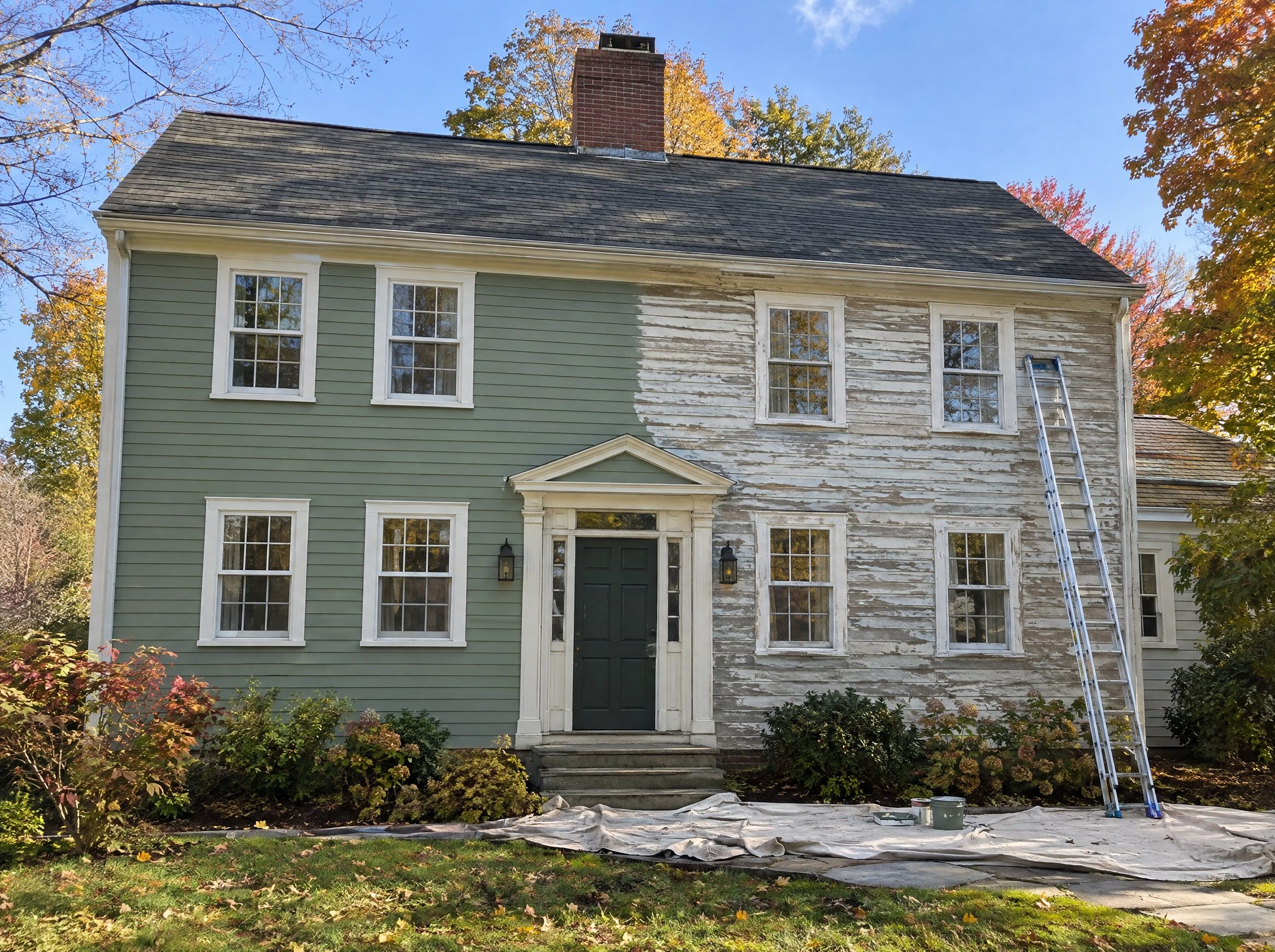
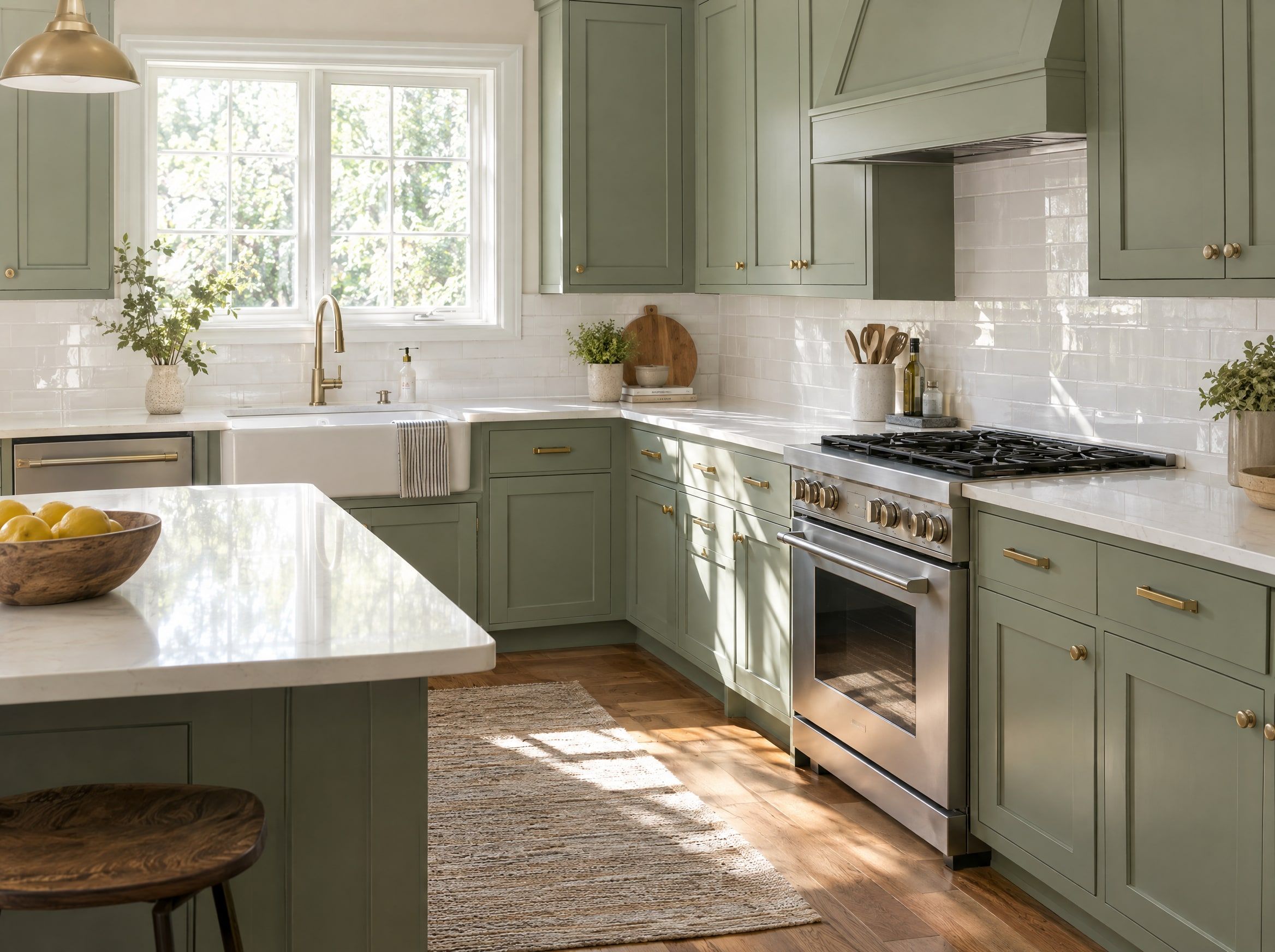

Ready to start your interior painting project?
Free written estimates for homeowners within 15 miles of Maynard.